
Ranch stores, feed stores and livestock distributors are regularly asked for a salt block for cows. This guide explains what cattle salt blocks are, which formats SM SALT supplies, what to specify when you request a quotation, and how the blocks are packed for wholesale orders. It is general product information for trade buyers; for the salt and mineral program of a specific herd, follow the advice of a veterinarian or livestock nutritionist.
What is a salt block for cows?
A salt block for cows is a solid block of salt that cattle can lick, placed in a pasture, barn or feeding area. SM SALT cattle salt blocks are cut from natural Himalayan rock salt from the Salt Range in Pakistan. They are plain rock salt: SM SALT does not sell them as a feed supplement or make nutrition or health claims for them.
Buyers often search for the same product as a cow salt block, a cattle salt lick, a salt lick for cattle, a salt lick for cows or a livestock salt block. In trade listings these names usually describe the same thing: a block of salt for cattle to lick.
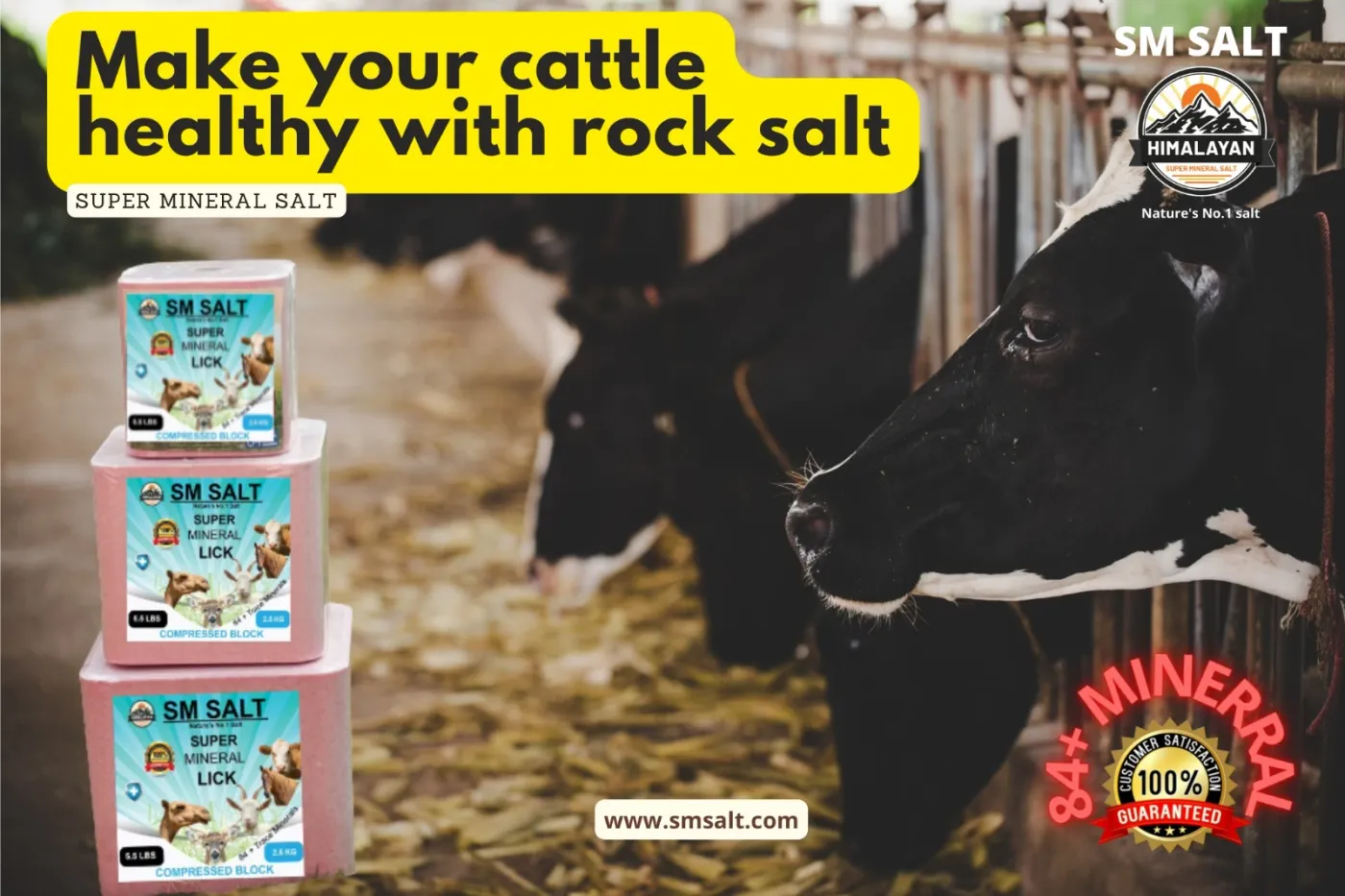
Cattle salt block formats from SM SALT
| Format | Description |
|---|---|
| Natural block | A rough-cut block of Himalayan rock salt, supplied as a protected, green-labelled unit |
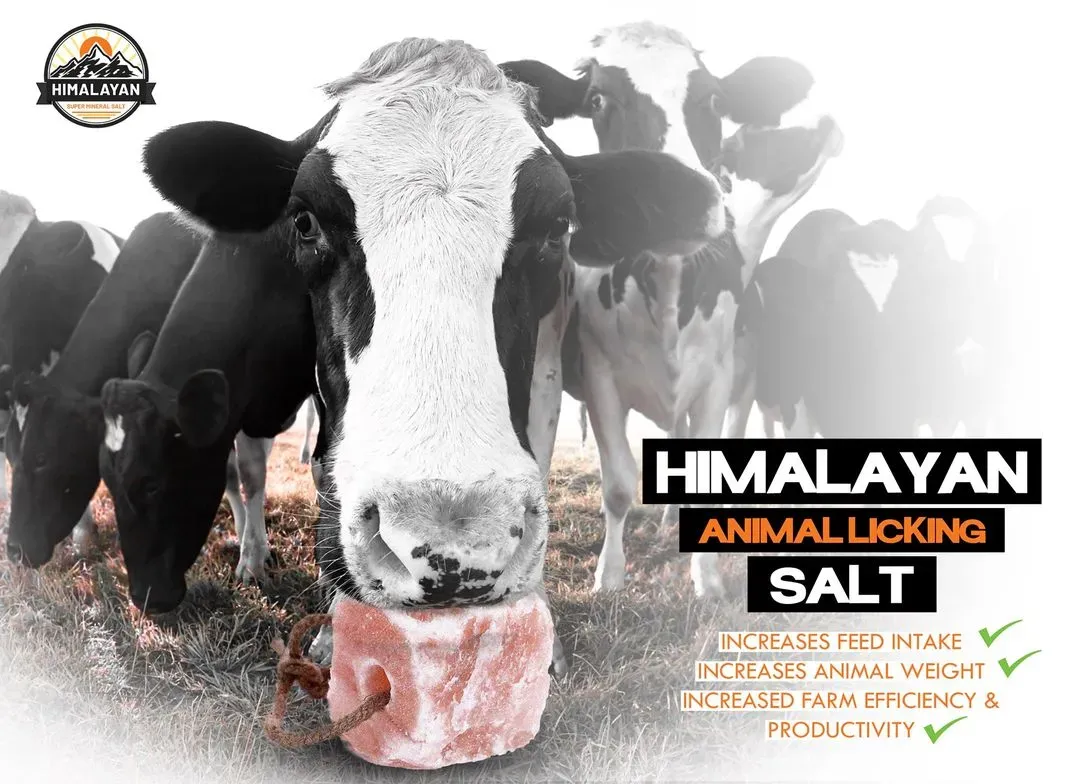
| Rope lick | A drilled natural block presented with a hanging rope, for fence, stall or barn use |
| Compressed block | Compressed Himalayan salt blocks in 2.5 lb, 5 lb or 10 lb, offered for goats and sheep; ask if you want them quoted for a mixed livestock program |
See the full cattle range on our Himalayan cattle salt licks and blocks page, and the compressed salt blocks for goats and sheep.
Choosing salt blocks for cattle: what to specify
- Format: natural block, rope lick, or both on one quotation.
- Size or weight: the size or weight you need per unit. Final weight tolerance is confirmed at quotation.
- Presentation: SM SALT green-label units or your own label, with or without rope.
- Packing: carton count, pallet plan or bulk.
- Quantity and destination: so the pallet or container calculation and the quotation can be prepared.
Placement and handling
Salt blocks are usually placed where cattle can reach them easily, on a stable surface or in a holder. Rock salt absorbs moisture, so store unused blocks in a dry place, keep them off wet ground and replace blocks that have become dirty or too small. How many blocks a herd needs, and whether salt is offered alongside other minerals, depends on the herd and its feed; that decision belongs to the farmer and their veterinarian or nutritionist.
Livestock salt blocks for wholesale buyers
Natural blocks and rope licks are packed as protected units in cartons, on pallets or in bulk for pallet and container orders to ranch-supply, feed-store and livestock distributors. Tell us the format, size or weight, presentation, quantity and destination, and sales will reply with a tailored quotation. You can also compare all wholesale animal salt licks, including salt licks for horses and salt lick blocks for deer.